TURNING A COMPLEX PRODUCT CATALOGUE INTO A MORE TARGETED CUSTOMER EXPERIENCE
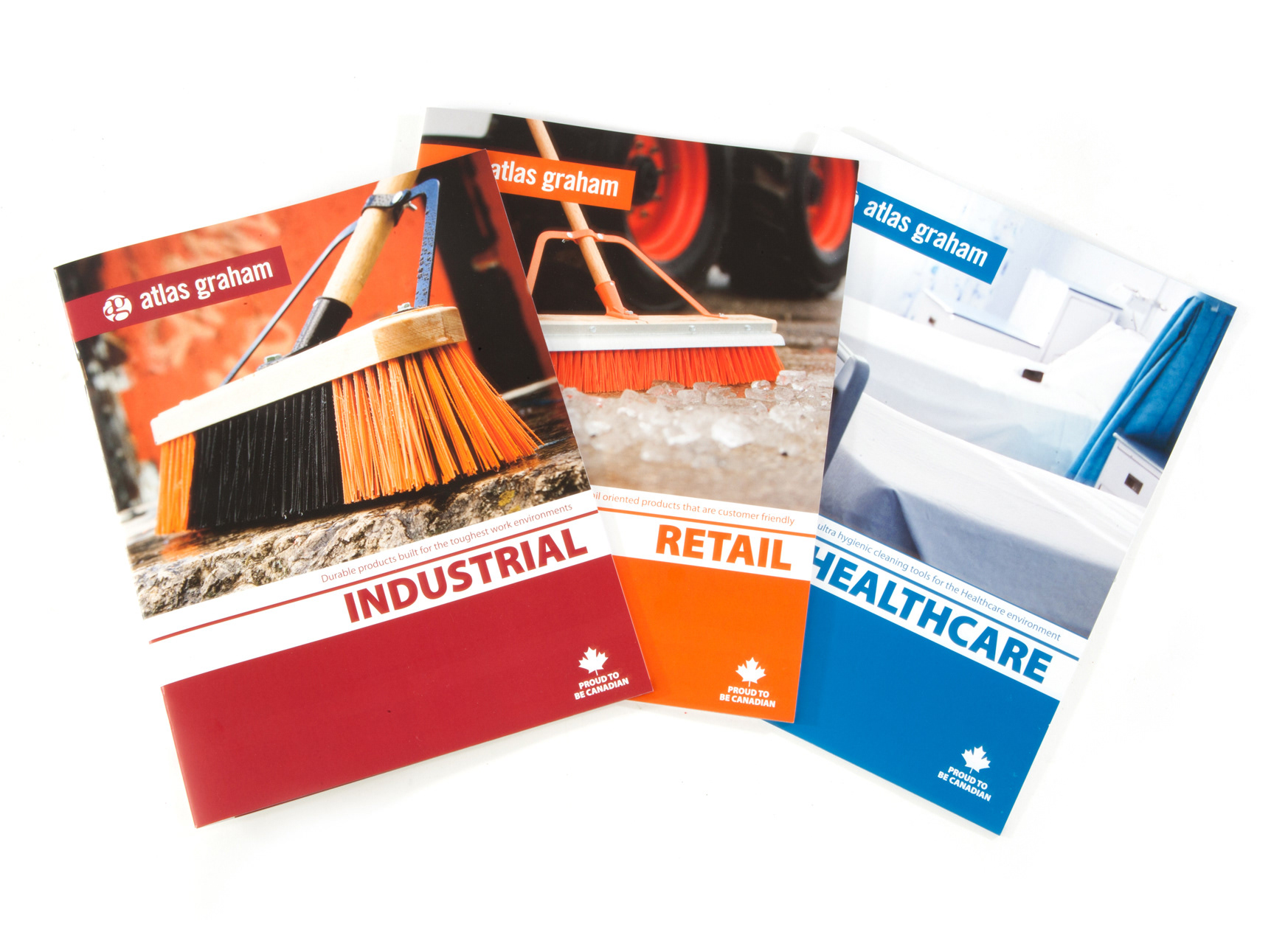
I led the redevelopment of a comprehensive product catalogue containing a large volume of product information, with the dual objective of reducing print production costs and making the information more relevant and accessible to different customer audiences. Rather than continuing to produce one large catalogue containing products across multiple sectors, I developed a segmented approach that divided the content into targeted catalogues for industrial, retail and healthcare audiences.
The project required managing a substantial amount of product information while maintaining accuracy, consistency and a unified brand experience across multiple publications.
THE CHALLENGE
The existing catalogue contained a large and diverse range of products, making it expensive to produce and requiring customers to navigate information that was not always relevant to their needs. At the same time, the catalogue represented an important physical marketing touchpoint for customers and sales teams. The challenge was to reduce production costs without reducing the amount or quality of information available to customers.
THE STRATEGY
I developed a segmented catalogue strategy based on the different audiences served by the business. Instead of producing a single comprehensive publication, the content was reorganized into targeted catalogues covering:
Industrial
Products and information relevant to industrial customers.
Products and information relevant to industrial customers.
Retail
Products and information relevant to retail customers.
Products and information relevant to retail customers.
Healthcare
Products and information relevant to healthcare customers.
Products and information relevant to healthcare customers.
This approach allowed customers to receive information that was more directly relevant to their needs while reducing the amount of unnecessary content included in each publication.
MANAGING COMPLEX CONTENT
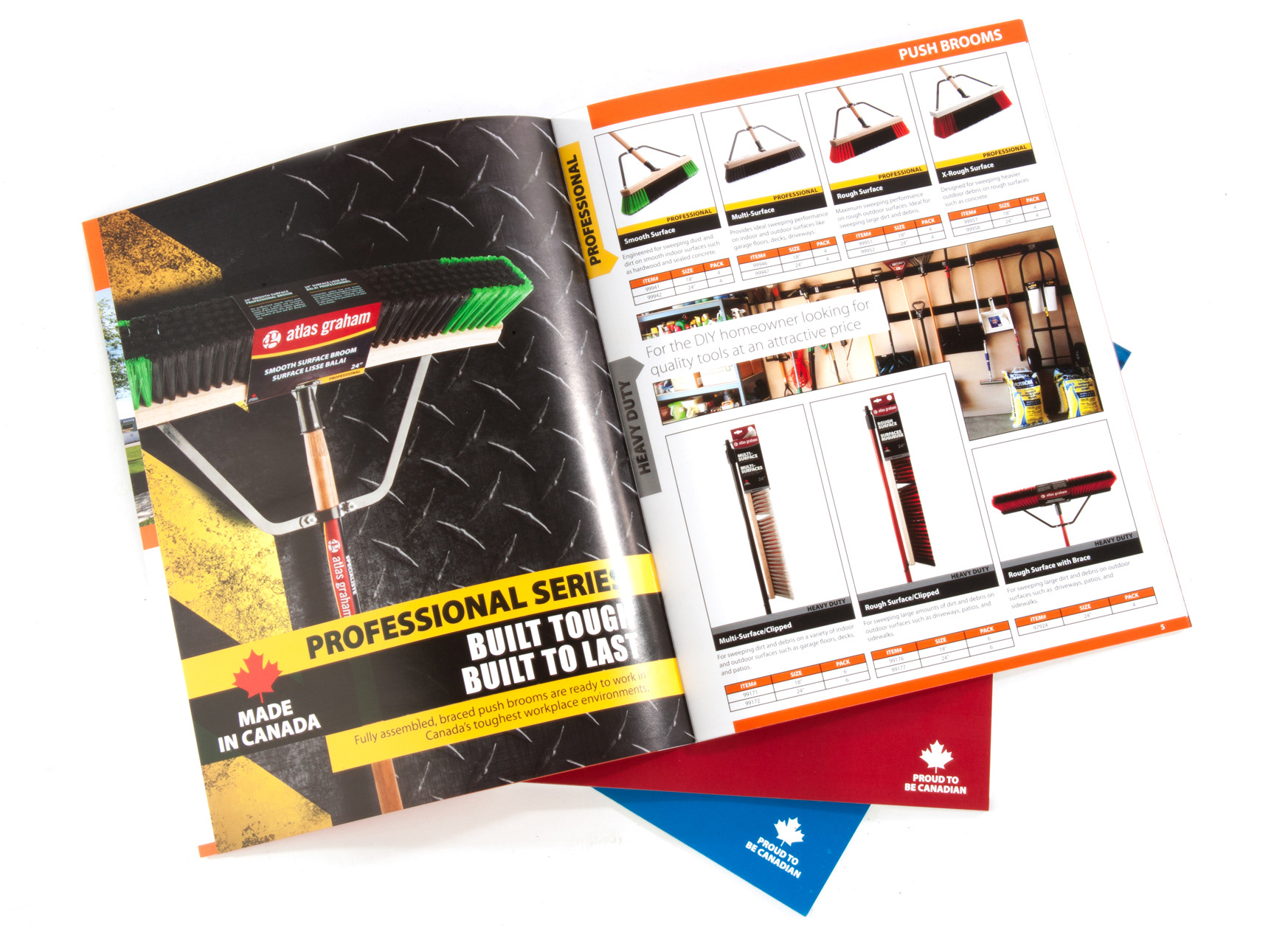
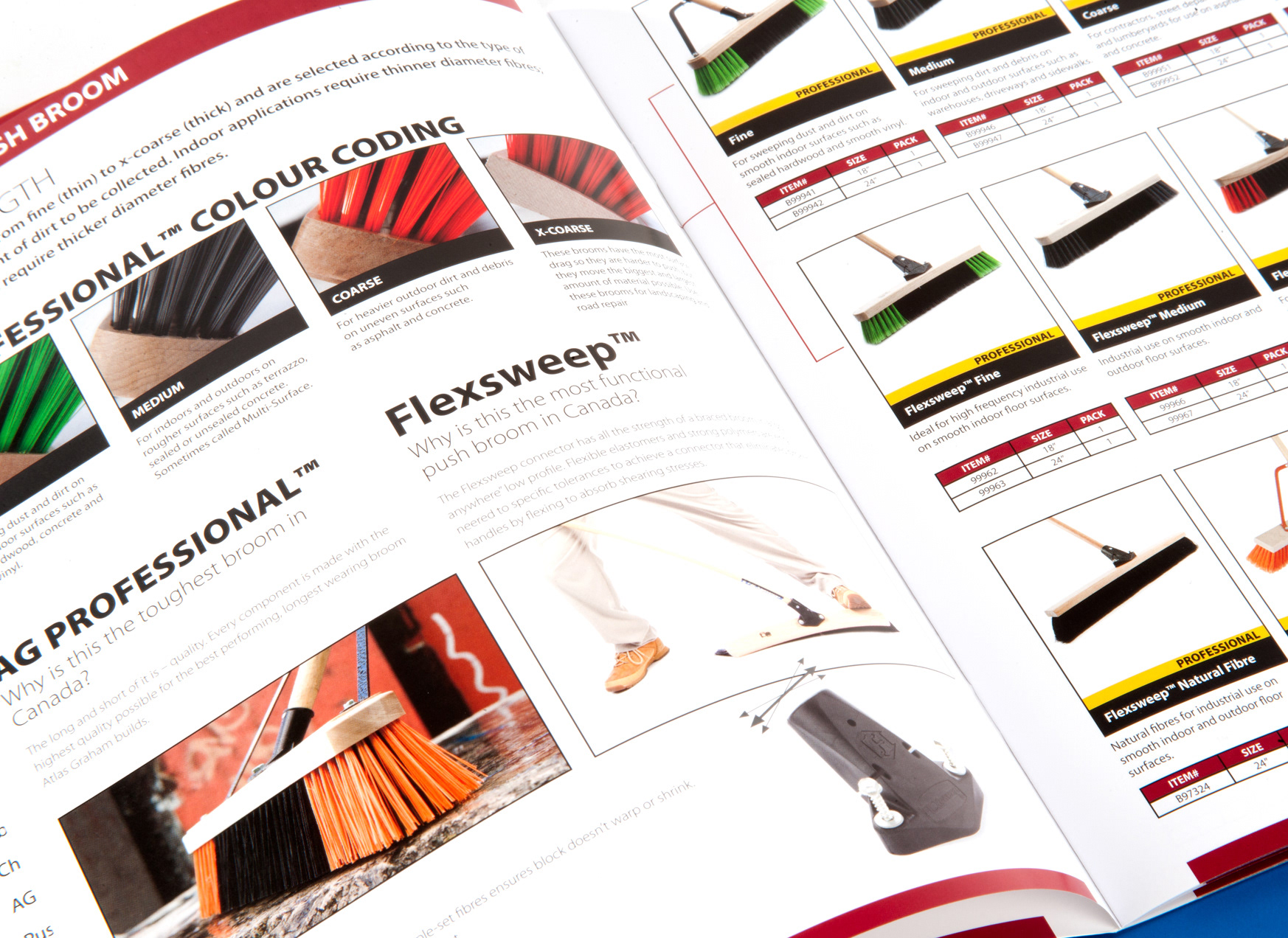
One of the key challenges was managing and organizing a large volume of product information across multiple publications. I worked through the content structure, product information, imagery and supporting copy to determine how the information should be organized and presented.
This required close attention to:
• Product accuracy
• Information hierarchy
• Content organization
• Image selection
• Layout consistency
• Brand standards
• Production requirements
• Information hierarchy
• Content organization
• Image selection
• Layout consistency
• Brand standards
• Production requirements
The objective was to make a substantial amount of technical product information easier to navigate without compromising the detail customers needed to make informed decisions.
COST OPTIMIZATION
The segmentation strategy also provided a practical opportunity to reduce print costs. Rather than repeatedly producing a single large publication containing information that was irrelevant to many recipients, the business could produce more targeted publications based on audience and distribution requirements. This created a more efficient relationship between content volume, print production and customer relevance.
The project demonstrated that cost reduction does not necessarily require reducing the amount of information available. In this case, better content organization and audience segmentation provided a way to improve both efficiency and usability.
PRINT & DIGITAL MARKETING
While this project was primarily focused on print, it reflects the same principles I apply to digital marketing. The core challenge was understanding:
Who is the audience?
What information do they need?
How should that information be structured?
How can we make the experience more relevant and efficient?
What information do they need?
How should that information be structured?
How can we make the experience more relevant and efficient?
The physical catalogue provided an important complement to the company's digital marketing and sales activity, particularly for customers and sales teams who relied on printed product information. The project therefore demonstrates my ability to work across both physical and digital marketing channels, adapting content and messaging to the environment in which the customer encounters the brand.
MY ROLE
CONTENT STRATEGY
Developed the structure and organization of a large volume of product information.
Developed the structure and organization of a large volume of product information.
AUDIENCE SEGMENTATION
Structured the publications around distinct customer groups and their information needs.
Structured the publications around distinct customer groups and their information needs.
CREATIVE DIRECTION
Led the visual direction and overall customer experience.
Led the visual direction and overall customer experience.
ART DIRECTION
Directed imagery, layouts and visual consistency across the publications.
Directed imagery, layouts and visual consistency across the publications.
BRAND MANAGEMENT
Ensured all publications remained aligned with established brand guidelines.
Ensured all publications remained aligned with established brand guidelines.
CONTENT DEVELOPMENT
Managed product information, copy and supporting visual content.
Managed product information, copy and supporting visual content.
PROJECT MANAGEMENT
Coordinated the catalogue development process from planning through production.
Coordinated the catalogue development process from planning through production.
BUDGET MANAGEMENT
Developed a more cost-efficient approach to catalogue production and distribution.
Developed a more cost-efficient approach to catalogue production and distribution.
THE OUTCOME
The segmented catalogue approach created a more targeted and efficient print marketing solution.
By organizing the information around specific customer audiences, the publications became easier to navigate while reducing the need to produce and distribute a single comprehensive catalogue to every customer.
By organizing the information around specific customer audiences, the publications became easier to navigate while reducing the need to produce and distribute a single comprehensive catalogue to every customer.
The project also demonstrated how content strategy, audience segmentation and creative execution can work together to reduce costs while improving the customer experience.
(Click on images to view in a larger window)